
Home / Whole-Home Generators in Jupiter, FL
Whole-Home Generators in Jupiter, FL
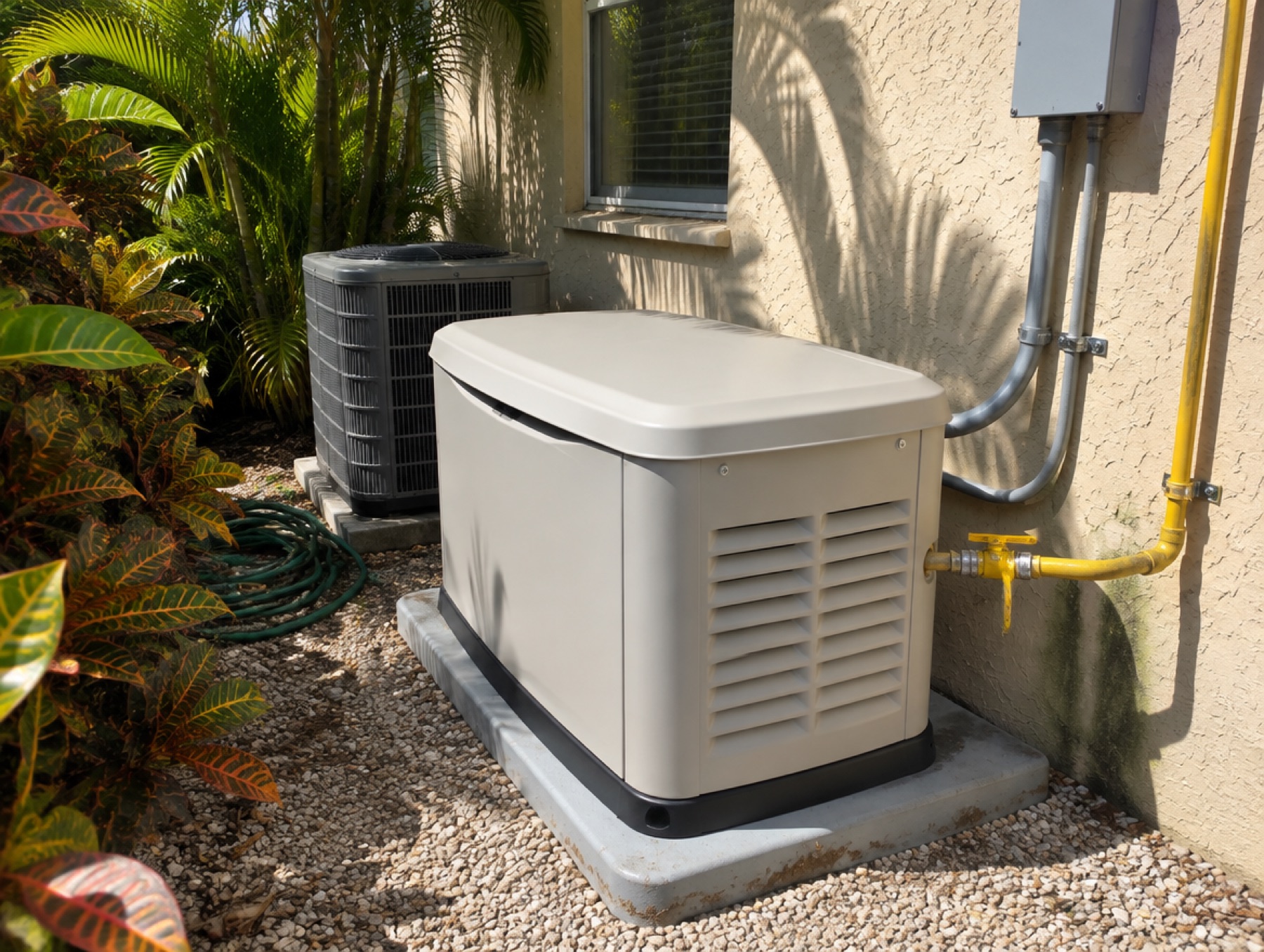
A whole-home generator in Jupiter, FL is a standby unit that sits outside on a pad, runs on natural gas or propane, and turns your house back on by itself a few seconds after the power drops. Second Grid helps you pick the size and fuel, then matches you with a licensed, insured local installer for the quote and the install.
- Most north county jobs are 24 to 28 kW
- Median permit value for that size: $16,627
- Free expert plan, then a written quote from a certified installer
Updated November 19, 2026
How a whole-home generator works
The generator sits on a pad outside, tied into your gas line or a propane tank. An automatic transfer switch watches the power coming in from FPL. When it drops, the switch tells the generator to start, then moves your house over to it. When FPL comes back, it moves you back and the generator shuts itself off.
Most units also run a short test on their own every week or so. That's the hum you hear from the neighbor's yard on a quiet morning.
Load management is the part people skip. It lets a smaller generator run a big house by switching off the biggest loads, like a second AC or the pool pump, when the generator is near its limit. Ask about it on every quote.
What size generator does a Jupiter home need?
Size is measured in kilowatts (kW). Here is what homeowners in Jupiter, Tequesta, Palm Beach Gardens and North Palm Beach actually installed, from 356 permits filed 2023 to 2026.
| Size | Jobs | Median permit value | Middle half |
|---|---|---|---|
| 22 kW and under | 61 | $14,920 | $12,390 to $17,658 |
| 24 to 28 kW | 148 | $16,627 | $14,009 to $18,916 |
| 30 to 48 kW | 59 | $28,970 | $23,900 to $33,216 |
| 60 kW and up | 28 | $42,695 | $35,744 to $50,650 |
Source: Town of Jupiter permit data and BuildZoom permit records, read November 2026. Permit values usually run under the real sale price. Full breakdown in the cost guide.
Rough starting points, before an installer does a real load calculation:
- 2,500 to 4,000 square feet with natural gas: a 20 to 26 kW air-cooled unit usually covers the whole house with load management.
- 4,000 to 6,000 square feet with 3 or 4 AC systems: a 26 kW air-cooled unit with strong load management, or a 30 to 48 kW liquid-cooled unit.
- Estates over 6,000 square feet: liquid-cooled units, often 48 kW and up. Quieter and built for long runs.
Natural gas or propane
Natural gas is the easy one. If your street has a gas main, the generator runs as long as the gas keeps flowing, which is usually the whole outage.
No gas main means propane. That means a tank, above ground or buried, and how long you run depends on its size and how full it is when the storm hits. Propane work in Florida needs its own state license, separate from the electrical license, so ask who on the installer's team holds it.
Either way, the gas hookup is its own permit in Jupiter.
Permits, setbacks and your HOA
The Town of Jupiter requires a generator permit and a separate gas permit. Town checklists in the area ask for the generator and transfer switch specs, a gas plan, load calculations, a riser diagram and pad and anchoring details. Your licensed installer prepares and pulls all of it.
Setbacks vary by town. North Palm Beach, for example, asks for 5 feet from the side line, 7.5 feet from the rear and 10 feet between the exhaust and any window or door. On a tight lot, that decides where the unit can go before anything else does.
HOAs can't simply say no. Florida law, section 720.3035, says an HOA can't deny a permanent generator that meets its adopted rules. It can still control placement, color and screening, so get the HOA's rules before the installer draws the plan.
Questions to ask any generator installer
We read about 290 Google reviews of Palm Beach generator companies. The crews get praised. The complaints are about calls nobody returned, permits left open and maintenance plans that did nothing. These questions cover most of it.
- What is your Florida contractor license number? Then look it up yourself at myfloridalicense.com.
- Who pulls the permits, including the separate gas permit, and when?
- What do I pay up front, and is the last payment due after the final inspection passes?
- What is the timeline from signing to a running unit, in writing?
- Who do I call when it won't start during a storm, and does a person answer?
- What does the maintenance plan include, and do you schedule the visits or do I?
- Will you show me how it works before you leave?
Generator, battery or both
A generator wins on long outages and running every AC in the house. A battery wins on silence and an instant switch. Many north county homes end up with both: the battery carries the house through the night, the generator takes over for the long haul. See home battery backup in Jupiter, FL for the battery side.
Questions people ask
How long will a whole-home generator run in Jupiter during a hurricane?
On natural gas, usually for the whole outage, as long as the gas keeps flowing. On propane, it depends on the tank size and how full it is. The installer can estimate days of runtime from your tank and your load.
How loud is a whole-home generator?
Common air-cooled home standby units are rated around 67 to 68 decibels at 7 meters while running. Liquid-cooled units with sound enclosures are quieter. Placement and screening make a big difference.
How much does a whole-home generator cost in Jupiter?
The median Jupiter-area permit value is about $17,800, and most 24 to 28 kW jobs land between $14,000 and $19,000 on the permit. See the cost guide for the full numbers.
Does a whole-home generator need maintenance?
Yes. Plan on a service visit at least once a year for oil, filters, the battery and a load test. Ask the installer who schedules it, you or them.
Does Second Grid install generators?
A state-certified Florida electrical contractor we match to your job quotes, permits and installs under their own license. We help you pick the equipment and the installer.
Be the House With the Lights On
Send the form for your free backup power plan.